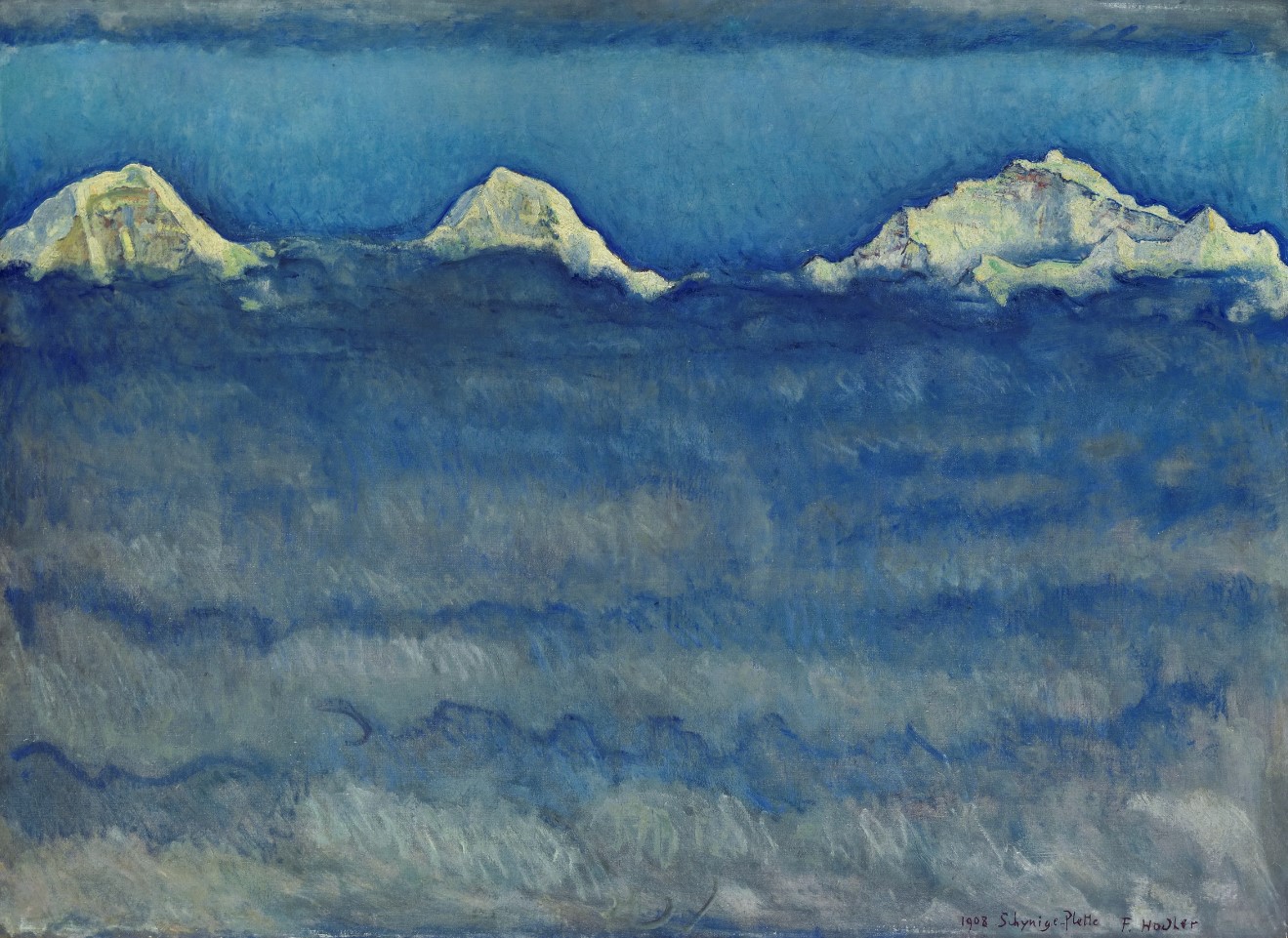

The collections of the Musée Jenisch Vevey include more than 40,000 prints, 11,000 drawings and some 1,600 paintings. To reveal their richness and meet the expectations of the public, the layout of the permanent galleries will now be redesigned and regularly updated.
The exhibition is organised as a stroll through the museum’s collections, structured by historical, iconographic or formal associations between works from different periods. It offers an updated view of the collection’s must-see pieces – such as François Bocion, Charles Giron, Ferdinand Hodler, Giorgio Morandi and Félix Vallotton – by placing them alongside paintings that are rarely or never shown. This approach, and the unexpected connections it creates, aims to arouse curiosity, encourage connections between works and feed the imagination. Each picture rail becomes a space for visual, symbolic or contextual reflection: a 19th-century landscape can dialogue with a contemporary abstraction around a play of colours or composition; classical architecture may resonate with a contemporary drawing, raising questions about standardisation, the imagination or utopia; a still life from the Dutch Golden Age may lead to reflections on the ready-made.
Primarily devoted to painting, the new presentation of the collections also gives pride of place to works on paper, thus affirming the museum’s specialisation in this field. In a dedicated room, drawings and prints from the reserves, both ancient and contemporary, will enrich the temporary exhibitions designed around various themes each quarter.
Each year, the museum strives to expand its collections through new acquisitions. A recent selection, displayed on the entrance wall, reflects this ongoing dynamic, which contributes to both the consolidation and diversification of the collections. The exhibition also highlights the importance of private initiatives in the history of the museum and the enrichment of its collections, notably through the Fondation de la Société des Beaux-Arts de Vevey, the Fondation pour les Arts et les Lettres, the Fondation des Amis du Musée Jenisch Vevey, and various other artists’foundations registered with the institution.
